Saturday, June 13, 2015

Saltaire


We’d had three excellent days in Leeds and on leaving the plan was to make Apperley Bridge, moor for the night, and then proceed to Saltaire next day.  Perceived wisdom says that when travelling west from Leeds to complete your journey as early as possible, and not to moor before you have reached Apperley Bridge due to a history of unsociable activity in the area .  Although our experience was  fine, possibly due to the time of day and the help two permanent lock-keepers. 
Saltaire was the brainchild of Sir Titus Salt (1803- 1876).  Salt made his fortune in the Bradford textile industry, manufacturing fine woollen fabrics.  Bradford was a grim, grimy town full of disease and dreadful living and working conditions and Salt believed his workforce deserved better and decided to build a new mill on the River Aire on a greenfield site. The mill, known as Salts Mill was the first building to be completed and opened in 1853, it was the biggest factory in the world and employed 3000 workers.  Eventually housing was completed for his entire workforce and the town of Saltaire was born.

Salt Mill straddling the Leeds & Liverpool Canal
Sir Titas Salt

Saltaire church.
Salt also built a town hall, hospital, school and alms houses.

Examples of housing built by Salt.
Next mooring of interest is Keighley, see you then.


Thursday, June 11, 2015

Leeds


Leaving Tuel lock meant it would be river all the way to Leeds.  The Calder & Hebble Navigation, with the flow pushing us on, with a width probably six times wider than a canal, and plenty of water under the hull resulted in us travelling at a far greater speed than normal. The C&H took us through Halifax, Dewsbury and Wakefield before reaching Castleford where we turned west onto the Aire & Calder Navigation heading for Leeds only 8 miles away, but now slowing, as the flow was against us.

Entering Wakefield on the Calder & Hebble Navigation.
 
These rivers were canalised in the mid 18C to allow commercial river traffic to support what was then the beginning of the industrial revolution in the UK. These larger craft meant that lock size was considerably larger than canal locks, as can be seen in the next four pictures showing Bacchus at Lemontroyd Lock just short of Leeds.

Leaving the wide Aire & Calder Navigation to enter the Lemontroyd Lock.
 
Flo emptying the lock - note the pressure of water leaving the lock.
 
Bacchus entering the lock.
 
Flo's in charge of the lock operation.
Leeds is a modern city that was born out of the industrial revolution. It stamped its name from the vast mills and warehouses that thrived along the Leeds & Liverpool Canal. Now clothing, printing, brewing and engineering plus a vast array of the arts makes it leading city not only of the north but of the whole of the UK.
We spent three days wondering around and doing the normal tourist things. The Town hall, civic hall, cathedral, city museum and the royal armouries museum, to name just some of what’s on offer.  Oh, and a little shopping.
The Civic Hall


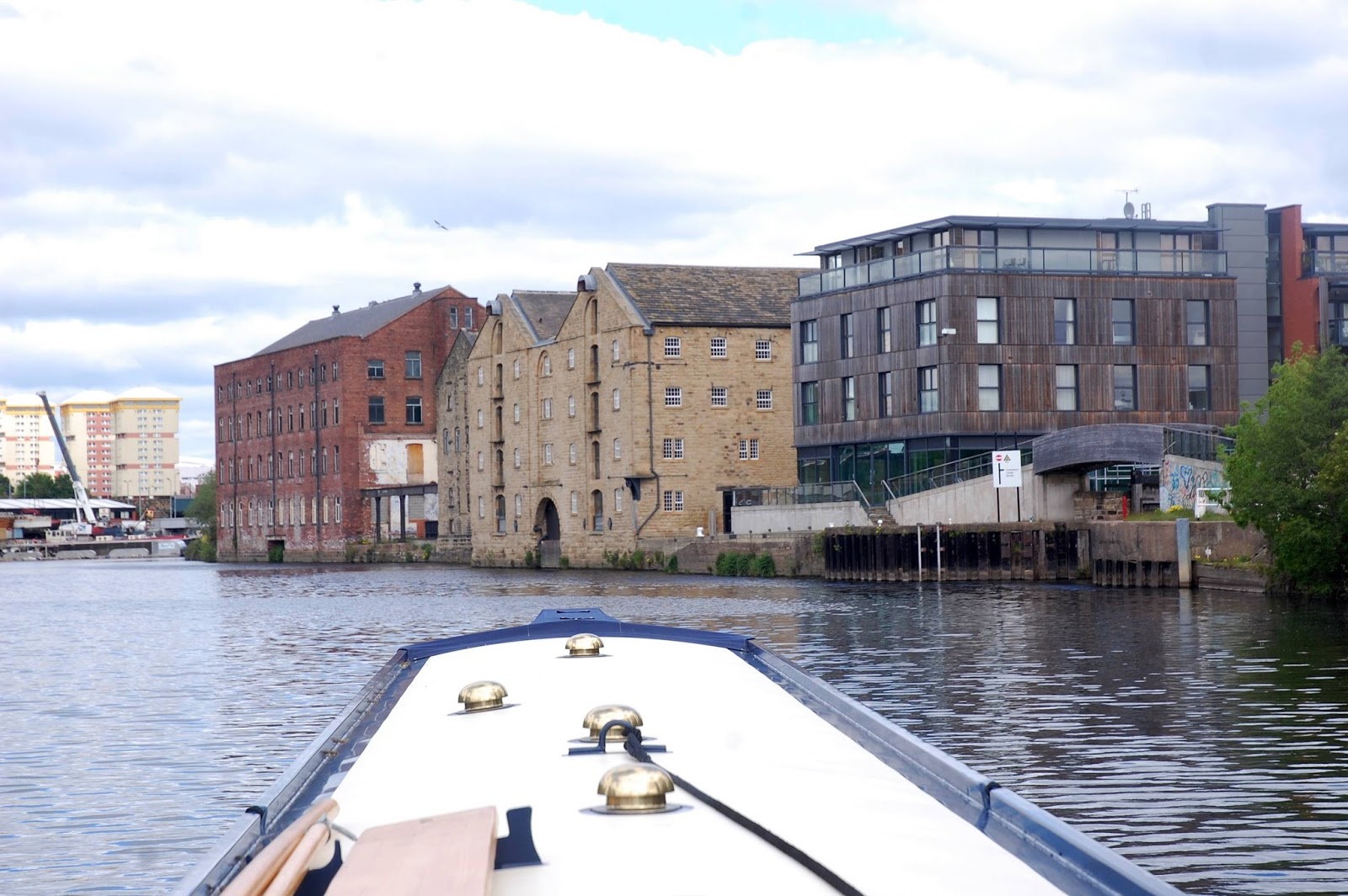
Clarence Dock

In 1777 this robust stone building was constructed as a terminal warehouse for the Leeds & Liverpool canal. Started in 1770, the canal was finally completed in 1816 at a cost if £1,200.000 nearly five times the original estimate.  This lock saw us leave the river for the last time and to join the Leeds & Liverpool Canal as we left Leeds for Saltaire.


Sunday, May 31, 2015

Over the Pennines


We reached the Ashton Canal before lunch to discover that the flight of locks was closed due to a lock paddle issue similar to the problem on the Marple flight; the difference here being that the broken paddle needed to be taken to a local workshop for repair and no one would commit to a completion time.  There was already two boats in front of us waiting so we decided to spend the night in a local marina and continue the journey the next day.
Straight down the flight next day, into Manchester and the beginning of the Rochdale Canal.  The Rochdale Canal was not an enjoyable trip. It’s short of water, extremely dirty and full of rubbish  and to complete the journey to the summit, on top of the Pennines to Yorkshire, is the matter of thirty two miles and ninety two locks.

The rubbish in the canal caused us considerable delays as the prop became fouled 6 times and one of the prop blades was damaged resulting in a slight bend to its tip.

This was the sixth fouling, Ken was beginning to feel p***ed off.
It took us 3 days to reach the summit pound.  The bank of our first choice of mooring was covered in bird droppings which clogged up our shoes and was a good foot above the bow, Ken stepped down to secure the rope, lost his footing and fell between the boat and the bank.  Fortunately there was no one else around as he needed to stand on the stern to undress before jumping into the shower.
Bugger!!
 
Guess what? We decided to move to a new mooring by passing through the highest double lock in England and mooring at 601ft above sea level on the summit pound.

Summit Pound Mooring

Highest Double Lock in England
The journey down the Rochdale canal to its junction with the Calder & Hebble River provided stunning views and interesting towns as we passed by Gauxholme, Todmorden, Hebden Bridge, Halifax and Sowerby Bridge. Much more enjoyable than the trip up.

Gauxholme Mooring

Gauxholme Mooring

Todmorden
 
 
Great Wall of Tod

Situated in the town of Todmorden this massive blue brick retaining wall which rises directly from the canal to support the adjoining railway line.  An estimated 4 million bricks were used to create this plain unbuttressed feature.
 
 
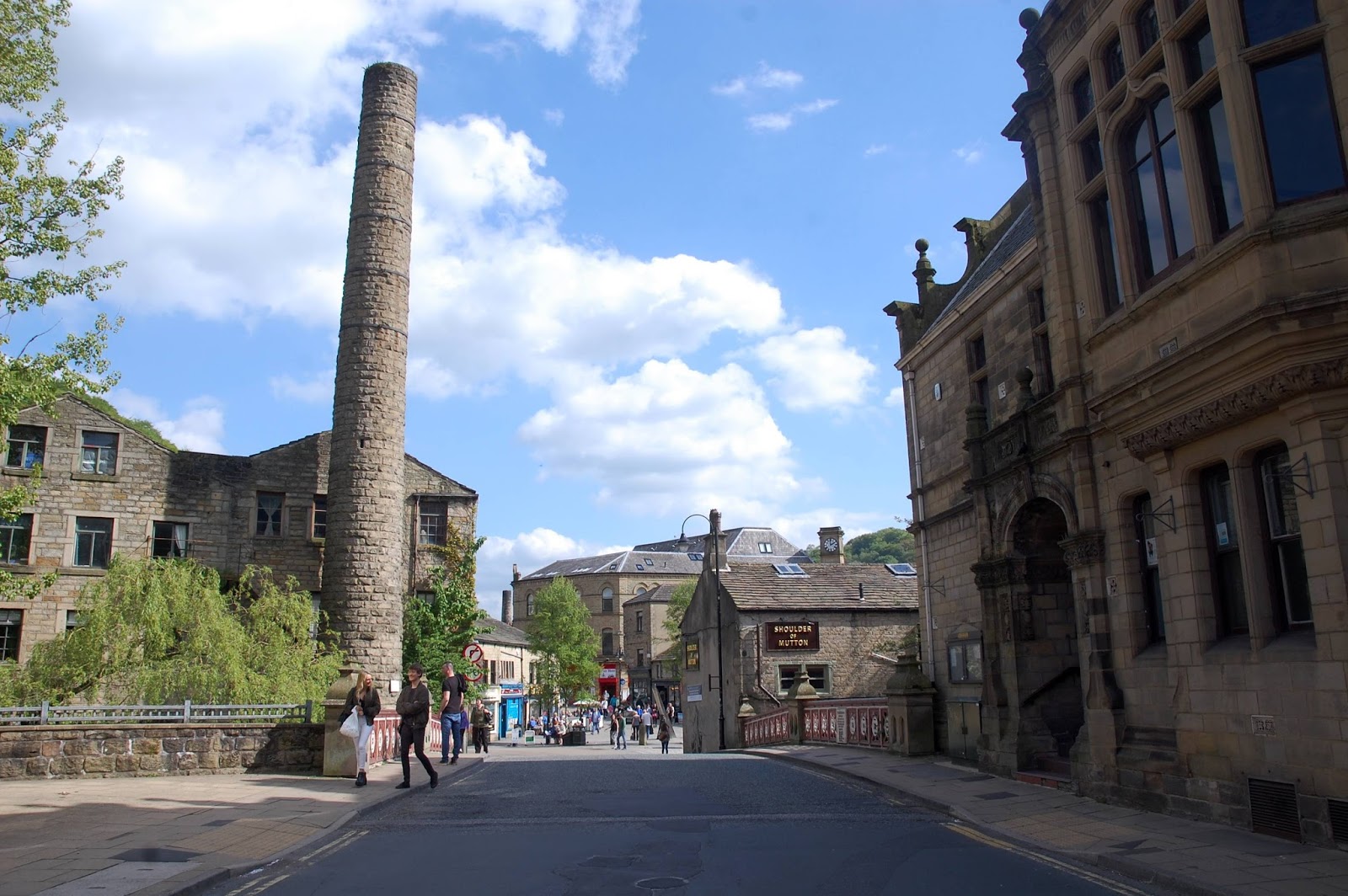
Hebden Bridge showing one of the many old mill  chimneys

Hebden Bridge
 
Hebden Bridge another chimney
 
Hebden Bridge on a sunny Saturday
 
Our mooring at Hebden Bridge
 
Basket maker next to our mooring at Hebden Bridge
  Next came the town of Sowerby Bridge with England's deepest canal lock with a rise of 19ft 6ins. Fortunately this lock is manned and all the work is done for us.  Out onto the river Calder and Hebble.
 
Tuel Deep Lock at Sowerby Bridge.
 
 
Onto the Calder and Hebble River
 
 Next Halifax, Dewsbury, Wakefield and then onto Leeds, it's river all the way - see you in Leeds.


Tuesday, May 19, 2015

Week 3. Macclesfield Canal & Peak Forest Canal.

Left our mooring early as we hoped to stop at Marple, restock the larder and complete the Marple flight of 16 locks. This would give us time to reach the Ashton Canal early in the afternoon.  That was the plan, but as our previous blogs have demonstrated plans don’t always works out.

Approaching Marple we passed Goyt Mill, one of the most impressive on the canal system, Built over 100 years ago it spun cotton imported through Manchester Docks and brought to the mill by canal. Spinning ceased in the 1960s.

Goyt Mill
Travelling north, the Macclesfield Canal terminates at the junction with Peak Forest Canal, we turned left at the junction and immediately started down the locks.  These locks proved to be extremely hard work as the paddle mechanism was not as easy to operate as one would wish. We were making good time until we reach the pound (the section of canal between two locks) between locks 9 and 10.  A work team from the Canal and River Trust were discussing a problem with the top gate of lock 9, and we were unable to enter the lock. The mechanism that allowed water into the lock had been dislodged and was obstructing the gate operation.  This was not good news as we were instructed to reverse back into the lock we had just exited and wait there until the pound had been drained and the mechanism repaired. The pound would then be refilled before we could proceed.

Full Pound

Empty Pound
The Repair
Bacchus waiting in lock 10.
The repair lost us 2 hours but we eventually passed through the bottom lock and immediately reached the Marple Aqueduct that carries the waterway almost a hundred feet across a steeply wooded ravine and the River Goyt. Running by the side of the aqueduct and even higher is a railway viaduct.

Marple Aqueduct.
Only managed a further 5 miles before calling it a day and still short of the Ashton canal.
Manchester and the Rochdale Canal next.

Tuesday, May 12, 2015

Week 2. Trent & Mersey Canal and the Macclesfield Canal

Josiah Wedgwood was the most famous innovator of pottery; he started in 1759 and by 1766 was to build a large factory in Stoke which was in use until the 1930s when an alternative site in open country close to the canal near Barlaston became the new location.

We left Stoke early, 6 miles and 8 locks aiming to reach Barlaston before lunch and visit the centre. Guess what? Moored up, walked to the visitor’s centre, only to discover it was closed for a major refurbishment. Bugger. 
Rainbow at Barlaston
The trip is slower than it would normally be due to the weather, we seem to have had more wet days than dry and as we don’t travel well in the rain time moored up reading, watching the TV and an occasional glass of wine seems to be the norm.  

Eventually we passed through Stoke-on-Trent, then the Harecastle Tunnel (1.75 miles, long it takes 30 minutes to travel through and you need to duck in places to save being scraped along the ceiling).  Exiting the tunnel we left the Trent & Mersey canal and turn north onto the Macclesfield Canal. We planned to chug for a further 3 miles and visit the 15th century Little Moreton Hall, one of England’s greatest half-timbered buildings. It’s about 1mile across farm land to reach the Hall from the canal and guess what it was raining. It was so bad that the cows had turned the track into a quagmire, which on top of the rain meant that was another planned visit that failed. Another bugger.


Half way up the Bosley Locks north of Congleton
We are presently moored about 3 miles south of Marples and intend to stay the day as it’s raining again. The last two days saw us stop for at short visit to Congleton before moving onto Macclesfield and then to Bollington. Best fish & chips for miles in Bollington.

Clarence Mill Bollington
We've not commented on Macclesfield as we had visited the town previously.  Please see our earlier blog for details.

Marples tomorrow and the 16 lock Marple’s flight into the Goyt valley.


Sunday, May 3, 2015

Summer Trip 2015

We did not do a blog for our trip last year, basically just couldn’t be bothered, but our journey took us into London, then we travelled up the Rivers Lee and Stort.  Both rivers were new to us and proved a very good trip.  To extend our outing we then travelled the Coventry Canal and the Ashby. The weather was kind which also helps to the enjoyment and we returned home at the end of July after being out for about three months.

The plan for this year’s trip is straight forward.  Seven hundred miles and around 500 locks, visiting Macclesfield, Leeds, Halifax, Doncaster and Sheffield, then over the Pennines and down to Wigan, possibly Lancaster, followed by Birmingham and then home.

We’ve now been out on the cut for one week having left Crick marina on the 26th April.  We chugged northwards along the Oxford and Coventry canals before joining the Trent & Mersey canal at Fradley Junction. Though we passed through Rugby, Nuneaton and Tamworth we didn’t stop as we have passed this way many times before.

The forecast is for rain all day so plan to stay moored just outside of Stone and move off tomorrow and visit the Wedgewood pottery museum close to Stoke.

Hawkesbury Junction. Passed the Greyhound, without stopping.

Working boat Australia


Wednesday, June 19, 2013

Liverpool

Left Manchester on the 27th May for Liverpool. As our due date for Liverpool was not until 9th June that gave us plenty of time to enjoy the trip, mostly done in good weather, through some of the prettiest canal route we have travelled.   We spent a couple of days moored at Pennington Flash, a large nature reserve on a former coal mining site.  Some walking and birding planned. 

We then chugged on to Wigan, reached on Saturday 1st June.  After walking into town to shop we left Wigan for Appley Bridge where we found a lovely mooring just short of the village and spent three days walking the meadows and woodlands before returning to the boat and ending the day with a BBQ.  The weather was glorious and one day we saw two foxes, two jays, a kingfisher and a deer.

It took a further three days to reach the outskirts of Liverpool.  Once you reach the edge of Aintree, bridge 9, Hancock’s swing bridge, access is restricted to those boats that had pre-booked a birth.  You are met by CRT employees who then control your movement for the last five hours of the journey that culminates in descending the four lock Stanley flight into the first of the Liverpool docks.  At this stage you are still two locks and 30 minutes from your mooring.  The dock at the bottom of the flight is overlooked by a massive brick warehouse built in the 19c to store tobacco shipped into Liverpool.  At the time it was the largest brick building in the world, and still is.

Leaving Stanley bottom lock you enter Stanley dock, then chug through Collingwood and Salisbury dock, passing Victoria clock tower before proceeding through the central docks to Princes dock, you then pass Pier Head and the Liver building, Mann Island lock and Canning dock and finally into Albert and Salthouse docks completing a journey that is probably one of the best on the system.
We stayed for three days, all that was available when we booked.  The days were full; we ferried the Mersey, visited numerous museums, two cathedrals, wandered the streets and strolled around the docks, themselves a tourist attraction in their own right with the largest collection of grade 1 listed buildings in the country.  We also took a Metro ride under the Mersey and visited Port Sunlight a model village on the Wirral Peninsula.  Built by the Lever brothers, (now Unilever), to accommodate workers in its soap factory.  Building commenced in 1888.  The name is derived from Lever brothers’ most popular brand of cleaning agent “Sunlight”.  Port Sunlight contains 900 grade 2 listed buildings.

The three days flew by, the weather held till the last day but our departure, controlled as our arrival by CRT staff, was in heavy rain.
Pics to follow.


Monday, June 3, 2013

Peak Forest and Ashton Canals


Travelled northwards along the final few miles of the Peak Forest Canal, eventually arriving at Dukinfield Junction, Ashton-Under-Lyne.  This is a major canal junction, the Huddersfield Narrow Canal runs eastwards into the Pennines, whilst the Ashton Canal travels west towards Manchester. Portland Basin overlooks the junction and is home to the Portland Basin Museum based in a former canal warehouse which was built in 1834.  The museum shows how people lived and worked in the area in the last 200 years.  It also includes the impact of the canal system on the social and historical history of the area.
Portland Basin & Museum
We moored the night just off the junction facing the museum, which we visited next day.  It’s only a small museum, but well worth a visit.  One of the staff, mostly volunteers, suggested we visit the Town Hall, which housed the museum of the Manchester Regiment. If you enjoy military history, or like Flo and I, have served, the museum is not to be missed.  The Manchester Regiment ceased to exist over 50 years ago having been amalgamated with other units in defence cuts.  The Regiment, like many British regiments that have sadly disappeared over the years, is rich in history enacted throughout the world, going back some 200 years.

We left for Manchester along the Ashton Canal; it was only two days away, but what a two days, eight miles and 27 double locks.  The last nine locks are known as the Rochdale Nine, we met them in the rain and in very high winds.  The first of the nine set the tone for the rest of the day, dropping the boat under an eighteen storey building, amongst concrete supports spouting out of the canal like sentinels guarding the lock gates.  It was like being in an underground canal.  It was probably one of the hardest section of locks we have ever encountered.
Piccadilly Village, outer Manchester
Outer Manchester mooring
 It was with some relief to reach Castlefield Junction which was to be our home for our three days in Manchester.  The weather was glorious for our visit and Manchester was full of life.  Running tracks; high and long jump and pole vault arenas had been erected throughout the City and international and Olympic athletes competed in front of large crowds in Manchester’s Street Games.  There was a real buzz around the streets, which really added to our visit, and continued the next day, Sunday, when thousands of runners took part in the annual BUPA Manchester marathon.
 
Castlefield Quays


Castlefield Quays
 

Manchester Street Games
Manchester Shambles
After the Manchester Blitz in 1940 The Shambles were one of only a few pre-19 century buildings left standing, and the Wellington Inn as the only surviving Tudor building in Manchester City Centre. During a major redevelopment in 1974 The Shambles were underpinned with a concrete raft and jacked up 4 feet 9 inches to fit in with the new development. In June 1996 an IRA bomb destroyed many of the surrounding buildings which resulted in yet another redevelopment.  The Shambles were subsequently dismantled and moved 300 meters to their present site. 

We did the tourist bit; visiting most of the sites, had a great time.

Thursday, May 23, 2013

New Mills and Marples


Moored overnight at New Mills and spent the next day exploring the Sett Valley Trail & Millennium Walkway.

The town of New Mills is set in an area of spectacular natural beauty standing above a natural rocky gorge, known as The Torrs, where the River Sett joins the River Goyt. The gorge was home to a number of cotton mills for nearly 200 years.  The Torrs Riverside Park - the park ‘under the town’ – extends to two miles and is a superb place to walk and learn about the natural and industrial history of the area.

Part of this trail was interrupted by what The Guardian newspaper described as ‘the last inaccessible place in England’.  The solution came in the form of the £550,000 Millennium Walkway, a 175-yard aerial walkway spanning the otherwise inaccessible cliff wall.  It’s a stunning design.

The Torrs
The Torrs
 
The Torrs


The Walkway
The Walkway

Old Mill overlooking The Torrs


We reached Marple locks on Tuesday 21st, probably one of the most scenic set of locks we have encountered in the last four years.  We were very lucky, just after the third lock we met three Canal Trust volunteers who stayed and helped us down the remaining 13 locks.  They were absolutely great. 

On our way down the locks the well-known hotel narrowboat, the Duke & Duchess, was on its way up with their holiday guests.  Duchess got its tiller caught in a lock gate and the guest that was helping didn’t realise there was a problem and opened the paddles.  Somehow Duchess became flooded and the last we saw of her, the crew were frantically bailing out.
The Marple Flight
The Marple Flight
'
'Duke'
At the foot of the flight the splendid Marple Aquaduct carries the waterway almost a hundred feet across a steeply wooded ravine, through which travels the River Goyt. Alongside stands an even loftier railway viaduct.
Marple Aquaduct
 

Marple Aquaduct


Ashton-Under-Lyne next stop